Like many Malawians, Veronica Kamkwamba has grown up using a hoe on her 1.6 hectare field in Kasungu District, but with little to show for her toil.
“We harvest about three tonnes in a good yea, but the yield hit about eight tonnes lately. My three children no longer sleep or walk to school on an empty stomach,” she brags.
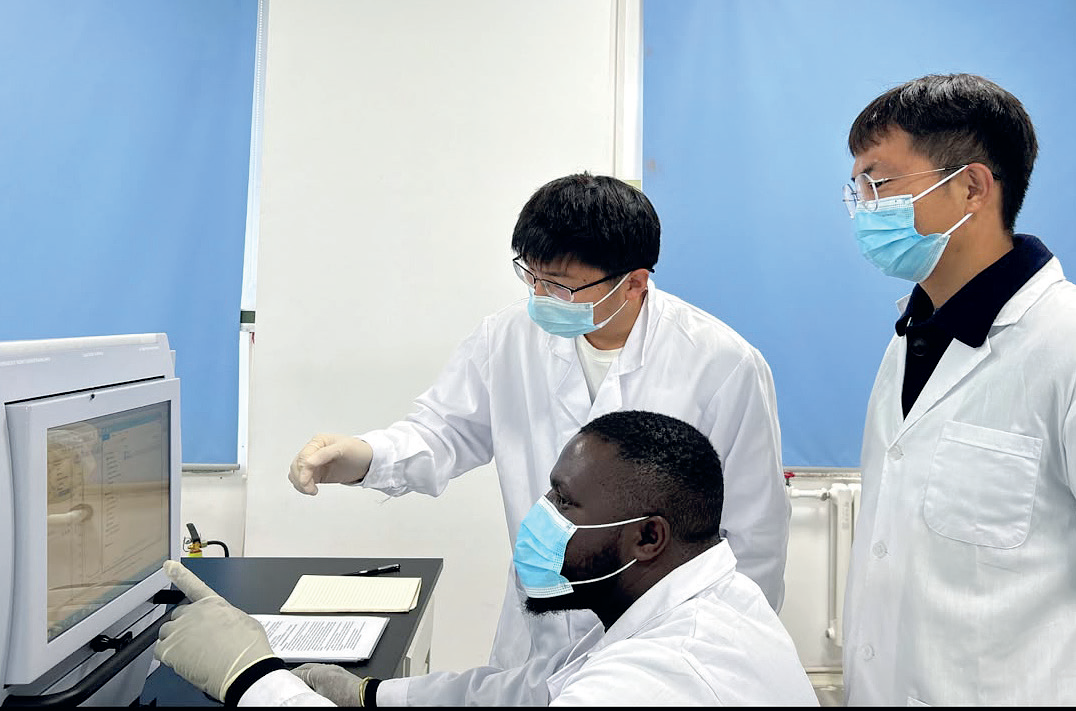
Kamkwamba credits the China-backed Science and Technology Backyard (STB) initiative, with her bumper harvest.
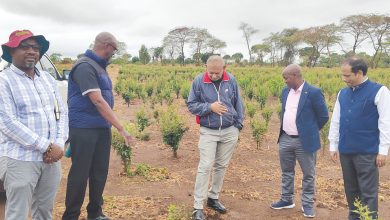
It brings researchers out of laboratories into villages, where they work with smallholder farmers throughout the cropping season.
Over 80 percent of Malawians depend on agriculture, but yields keep dwindling amid worsening hunger and poverty.
Among others, smallholder farmers often harvest little per hectare due to limited access to high-yielding farming methods.
The STB model seeks to nurture a new generation of agricultural experts by bridging the gap between scientists and farming communities.
From five masters degree students in 2021, the initiative has enrolled 52 Malawians to strengthen the ultilisation of practical research experience.
Samson Mofolo, the programme’s first doctorate student, is combining his studies at China Agricultural University with his duties as the Ministry of Agriculture, Irrigatio and Water Development crops officer in Phalombe.
“We are basically transferring the scientific knowledge we learned from China back to the farmers in Malawi,” he says.
Taking research breakthrough directly to farmers breaks traditional extension techniques that mostly rely on occasional visits.
STB is a “zero distance” approach where researchers stay close to farmers and match their scholarly work with farming activities while providing free support to farmers.
They train farmers in techniques, including optimised plant spacing, soil fertility management, fall armyworm control, intercropping, moisture testing and record keeping.
Together they identify challenges, conduct field trials and develop solutions suited to local conditions.
“Before the new approach, the average yield was around two tonnes per hectare. Today, it can reach six to eight tonnes,” Mofolo says.
The local team was inspired by Chinese professors who work directly with farmers.
“We could go to the field where a professor gets in the mud. Watching this for the first time, I thought: if he is doing it, why can’t we do it?” Mofolo recalls.
The boots-on-the-ground initiative has become handy in Malawi’s push to end chronic hunger and widespread poverty.
Malawi requires about 3.3 million metric tonnes of maize annualy, but yields remain low due to climate shocks, barren soils and shrinking land size per person.
The STB farming practices has helped households that once faced hunger to produce surplus maize for sale. The proceeds help many acquire goats, chickens and pigeons.
“We reduced the spacing of our ridges from 90 to 70 centimetres apart and more ridges mean a higher harvest,” says Esnart Phiri, from the district that also grows tobacco.
The farming techniques from the Quzhou region has expanded to Africa as agricultural students go to China and applying the lesson in their countries.
China-trained agricultural staff have established STBs in Malawi. They support lead farmers, field demonstrations and technologies for higher maize harvest.
Nine SBTs benefit over 50 000 farming households across Malawi, Zambia, Kenya, Ethiopia and Tanzania.
For the likes of Kamkwamba, however, the growing harvest shows that science, when transmitted from laboratories to farmers’ fields, can transform not only yields but also livelihoods in neighbouring communities.